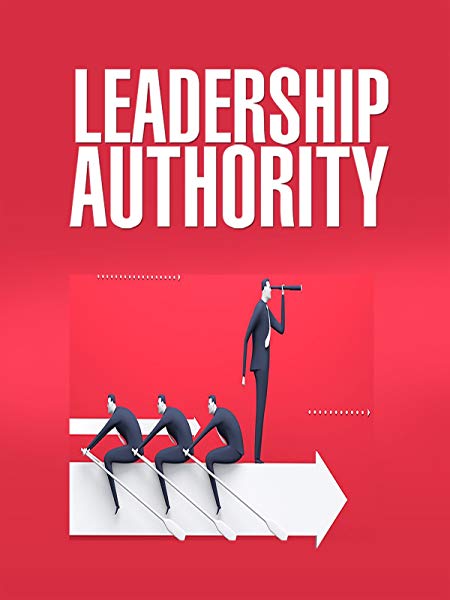
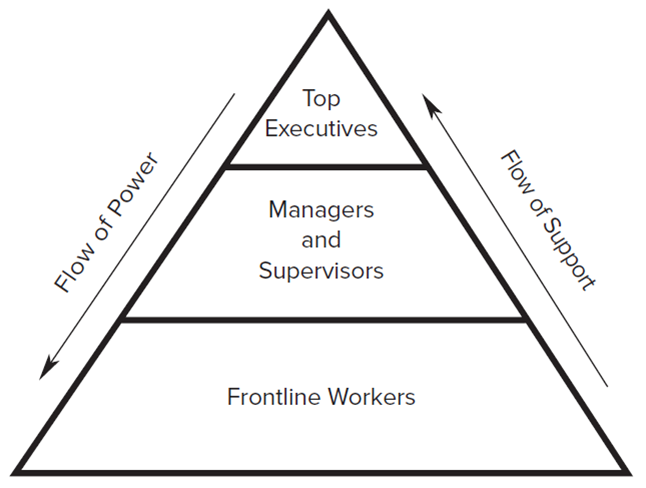
Leadership authority is based on position in a social hierarchy and power flows from the highest level to the lowest. In an organizational pyramid, workers support managers and supervisors who in turn support executives
Top-Down View
Traditional view of leadership in the United States •
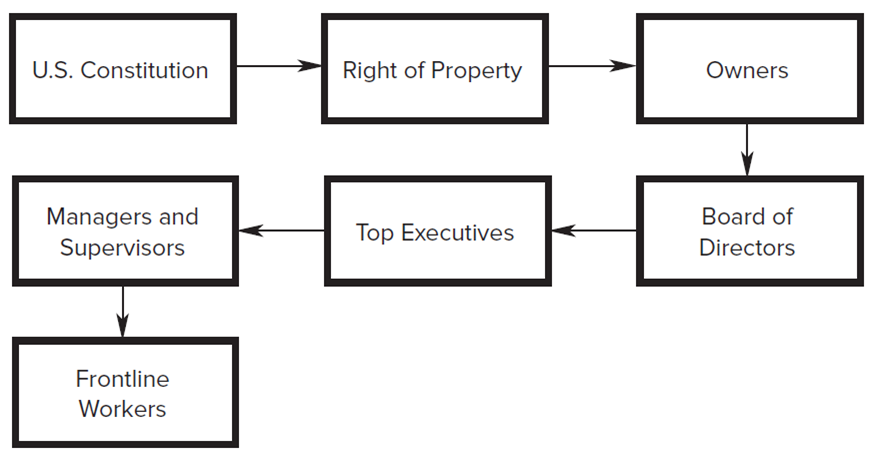
- The right of authority is derived from the right of private property
- Owners have the right to manage their affairs as they decide, as long as they do not violate the rights of others
Bottom-Up View
First described by Chester Barnard of A T and T •
- Power flows from below because people can reject a directive by saying no
- Saying yes or no affirms or denies the authority of others
Servants approach
Following are some key points that describe this style effectively-
- Caring for and wanting to help others
- Conscious choice causes one to aspire to lead
- Trust is given to leaders who work for the common good
- People do not trust the self-server
- People choose to follow and work with servant leaders
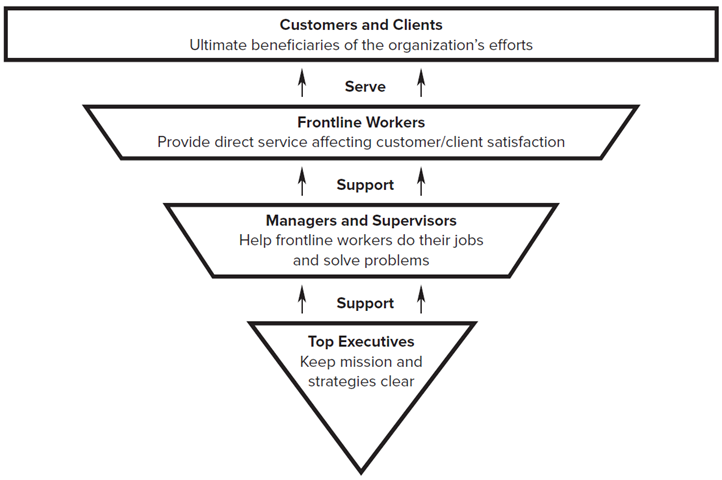
The Upside-Down Pyramid Approach
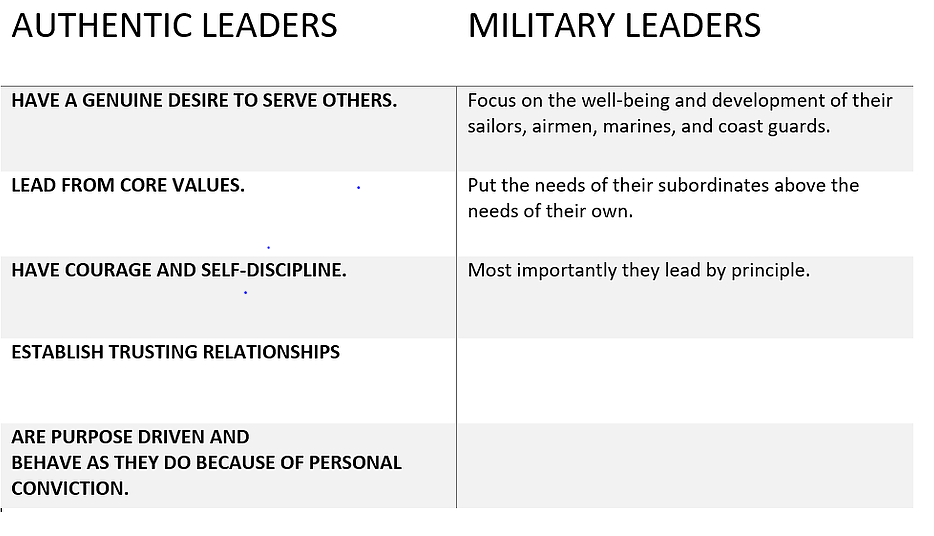
Following is the comparison between two types of leaders
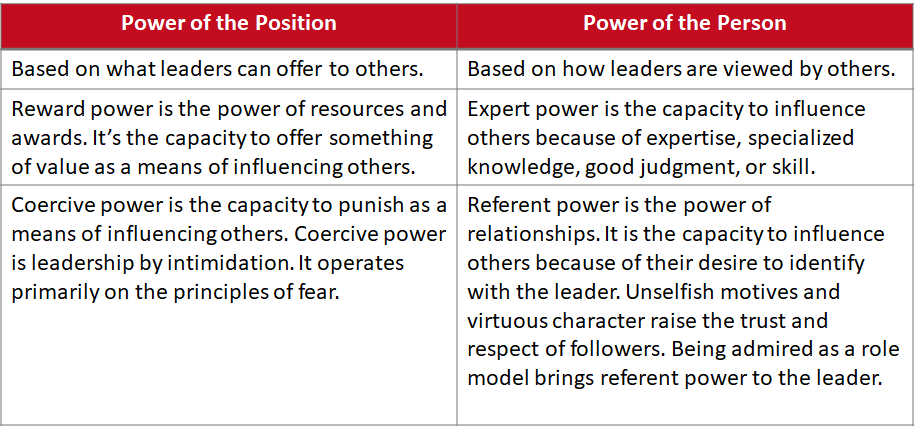
Sources of power

One-way and two-way Communication
some problems that come along with One-Way communication.
- People may be reluctant to say or do anything that might offend the powerful figure
- People may become dependent on the leader to make all the decisions
- People are unwilling to risk making a mistake and being criticized
- People may become resentful of the leader
- Leader is seen as autocratic or arrogant
Then the question arise of how to use this one way type of communication effectively in order to avoid any problems. For that we need to develop two way communication. Following are the guidelines in order to develop this way-
- Being approachable
- Modeling an open and honest style of communication
- Being patient
- Drawing people out without constantly evaluating their mistakes
Some basic points to remember for two way communication are-
- Stop talking
- Put the talker at ease
- Show that you want to listen and remove distractions
- Empathize with the person
- Be patient
- Hold your temper
- Go easy on argument and criticism
- Ask questions
- Encourage clarification
- Stop talking
Thank You for visiting my Blog.
 Mehtab's blog